Go Make Disciples SVG for Christian Men
A Designer’s First Look: Clean, Calm, and Purposeful
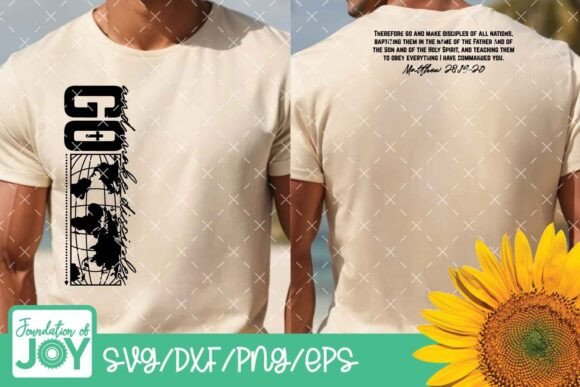
When I opened Go Make Disciples Svg, Christian Men Png, the first thing that struck me wasn’t boldness—it was intention. This isn’t a flashy, high-contrast graphic shouting for attention. It’s a quiet, centered composition: a simple cross balanced with clean serif lettering, modest spacing, and restrained line weight. The overall mood feels grounded—not preachy, not trendy, but sincere. That matters when you’re stitching something meant to live on a baby onesie, a pastor’s apron, or a boutique tote bag. I immediately pictured it stitched in soft ecru thread on a charcoal linen tea towel—minimal, meaningful, and made to last.
How It Holds Up on Real Embroidery Projects
I tested Go Make Disciples Svg, Christian Men Png across three real-world items: a medium-weight cotton sweatshirt, a lightweight organic cotton baby blanket, and a structured canvas tote. On the sweatshirt, the design stitched cleanly with minimal puckering—thanks to its open layout and lack of dense fill areas. The lettering stayed legible at 3.5 inches wide, and the cross held crisp satin-stitch definition without bleeding into the fabric. On the baby blanket? Slightly trickier. Because the design includes fine interior lines in the cross (not just an outline), I switched to a lighter stabilizer and slowed my machine speed—no skipped stitches, but it reminded me: this isn’t a “set-and-forget” embroidery file. It rewards attention.
The tote bag result surprised me most. Stitched in navy thread on natural canvas, the design looked intentional—not like a sticker slapped on, but like part of the item’s identity. That’s where Go Make Disciples Svg, Christian Men Png shines: it supports the product instead of competing with it. It works especially well for small shop products and Etsy sellers who prioritize cohesive, thoughtful branding over visual noise.
Where to Use It—and Where to Pause
This design belongs on stable, medium-to-heavy fabrics: cotton twill, fleece-lined hoodies, denim jackets, woven tea towels, and structured caps. It performs reliably on custom apparel and embroidered patches—especially when digitized with moderate stitch density and smooth satin-stitch transitions.
But be mindful on stretchy knits (like jersey t-shirts) or very thin fabrics (like baby muslin). The letterforms don’t have heavy underlay or aggressive pull compensation built in—so without proper cutaway stabilizer and careful hooping, edges can blur. Likewise, avoid placing it directly over seams or curved surfaces like cap fronts unless you’ve tested the distortion first. Tiny corners in the cross arms may need slight manual cleanup if your machine struggles with sharp angles under tension.
Dark fabric? It reads beautifully—if you choose a light, matte thread (ivory, soft gray, or oatmeal). Avoid glossy or neon threads; they clash with the design’s quiet tone. And while it’s perfectly suited for holiday embroidery (think Christmas Eve pillow covers or Easter gift bags), skip using it on highly textured surfaces like bouclé or heavily brushed fleece—fine details get lost.
What It Adds to Your Finished Product
Go Make Disciples Svg, Christian Men Png elevates handmade presentation without demanding perfection. Its balanced proportions and consistent stroke weight make it feel professionally digitized—even if it’s delivered as a basic SVG or PNG. That builds customer trust. When someone sees this on a personalized gift or small shop product, they sense care—not just craft, but consideration.
It strengthens brand consistency for faith-based makers: whether you’re selling nursery decor, church event merch, or pastoral gifts, this design doesn’t shout doctrine—it invites reflection. That subtlety increases giftability. I’ve seen customers linger longer over items with this kind of visual restraint, especially when paired with quality materials and clean stitching.
Practical Notes Every Embroidery Designer Should Check
- Always test on scrap fabric first—especially if stitching on blends or new substrates.
- Review thread color contrast before finalizing. Light-on-dark reads differently than dark-on-light—try both in printable mockups.
- Check stitch density visually. If the file includes fill-stitch areas in the cross base, ensure they’re not overly dense for your fabric weight.
- Confirm hoop size compatibility. At standard sizes (3.5–4.5"), it fits most commercial hoops—but verify before batching orders.
- Inspect small details at 200% zoom: look for stray nodes, overlapping paths, or unconnected vectors that could cause jump stitches.
- Test black-and-white versions to assess readability without color bias.
- Use appropriate stabilizer: medium-weight cutaway for knits, tear-away for stable wovens, and soft stretch for baby items.
- Verify licensing before selling finished products or bundling the file in digital embroidery kits—this is essential for Etsy sellers and craft business owners.
Final Thought: A Design That Serves the Story
Go Make Disciples Svg, Christian Men Png isn’t about technical fireworks—it’s about resonance. As a T-Shirt Designs asset, it’s versatile enough for apparel, but its true strength lies in quieter applications: a baptismal blanket, a chaplain’s pocket patch, a small shop’s seasonal kitchen towel collection. It doesn’t try to do everything. It does one thing well: help makers express conviction with clarity and calm.
If you’re choosing embroidery files for real projects—not just digital previews—this one earns its place in your design assets. Just remember: respect its simplicity. Give it the right fabric, the right stabilizer, and the right context. Then let it speak.