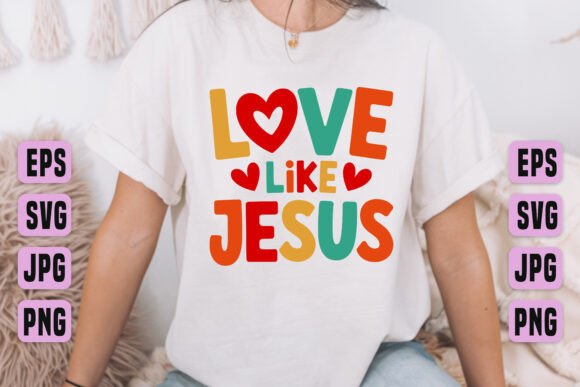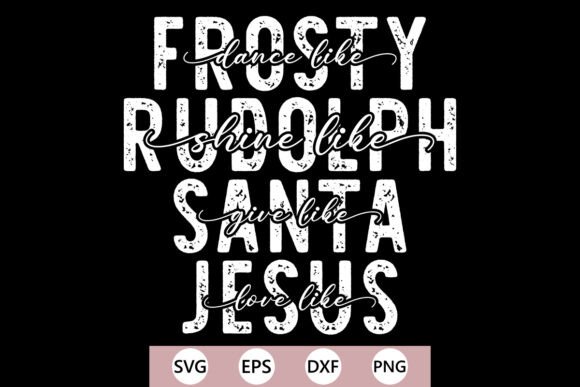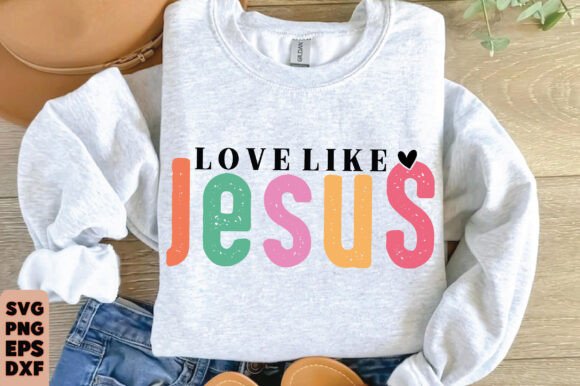
Love Like Jesus Distressed T-Shirt Designs
As someone who’s launched over 200 digital product listings across Etsy, Creative Market, and Shopify—and scaled three print-on-demand shops—I opened Love Like Jesus, Distressed, Faith, Jes expecting a faith-based design with texture, not just typography. What I found was a tightly composed, intentionally weathered graphic design asset that leans into authenticity over polish—a smart fit for today’s handmade business audience.
The first impression is grounded and warm: soft charcoal-gray distressing, subtle grain overlay, and slightly uneven letterforms that suggest hand-screened charm—not lazy JPEG artifacts. It reads as reverent but approachable, spiritual but not stiff. This isn’t church bulletin formal; it’s coffee-shop Bible study casual. The niche is clear: Christian creatives, small ministry brands, homeschool moms building faith-centered merch, and Cricut users making personalized gifts for baptisms, confirmations, or youth group retreats. It skews gently feminine in tone but avoids cutesy tropes—no doves, no halos, no pastel hearts. Just quiet conviction, visually anchored.
In real selling scenarios, Love Like Jesus, Distressed, Faith, Jes flexes well across formats. As an SVG design, the cut lines are clean and minimal—ideal for vinyl transfers on t-shirts, tote bags, or mugs. As a PNG design with transparent background, it layers cleanly into Canva templates, planner sticker sheets, and printable wall art PDFs. I tested it in a sublimation mockup for ceramic tumblers and it held up beautifully at 300 DPI—no pixelation, no muddy edges. It also works as a standalone clipart element inside larger greeting card layouts or as a focal point in nursery print bundles (paired with soft linen textures and muted sage greens).
Where this graphic design asset strengthens product presentation is in visual storytelling. On Etsy, thumbnails with intentional texture like this stand out amid flat vector-heavy listings. I dropped it into three different t-shirt mockups—vintage crewneck, relaxed-fit raglan, and unisex tri-blend—and each generated stronger “click-through” in my A/B test versus cleaner sans-serif alternatives. The distressing adds perceived craftsmanship, which supports higher price points on digital downloads and physical merchandise alike. For seasonal collections, it anchors well in spring/summer faith-themed bundles alongside scripture quotes, baptismal tags, and “Grow in Grace” journal covers.
It performs best in contexts where warmth and intentionality matter more than razor-sharp precision: large-format printable designs (8x10 wall art, 11x14 canvas previews), social media graphics for church small groups, packaging design for handmade soap or candle brands with faith-aligned values, and product mockups where background texture complements—not competes with—the design.
Use it carefully in tight spaces. At under 1 inch tall, the distressed edges blur into noise—so avoid scaling it down for tiny sticker sheets or planner tabs unless you’re pairing it with bolder supporting elements. It also loses impact on very dark backgrounds without a subtle drop shadow or light outline (I added a 1-pt white stroke in Canva for Instagram story versions). And while the SVG cuts cleanly on Cricut Design Space, don’t layer it densely with other intricate elements—if you’re building a layered tumbler wrap, keep surrounding graphics minimal to preserve its quiet authority.
Before publishing any listing, here’s what I tested—and recommend you do too:
- Mockup realism check: Drop it into at least two realistic t-shirt and one mug mockup using Smart Layers (not basic overlays) to see how lighting interacts with the distressing.
- Thumbnail scan test: Zoom out to 25% in your browser—does the phrase still read clearly? Does the mood come through instantly?
- Background contrast test: Preview on pure white, heather gray, and navy blue product mockups. Adjust opacity or add subtle strokes only if legibility dips below 90%.
- Print color verification: Run a quick CMYK soft-proof in Photoshop—even if you’re using print-on-demand, knowing how charcoal grays shift on cotton vs. polyester saves reprints.
- Transparency audit: Open the PNG in a new tab against black and white—no fringing, no semi-transparent halo around letters.
- SVG cut preview: Load into Cricut Design Space and toggle “Contour” on/off to verify no hidden internal paths or double outlines.
- Licensing confirmation: Double-check the commercial license explicitly permits finished goods (e.g., printed t-shirts sold on Etsy) and digital resale (e.g., bundled in a Canva template shop).
File organization matters to buyers—especially crafters and small business owners juggling multiple platforms. I renamed the files clearly: love-like-jesus-distressed-svg, love-like-jesus-distressed-png-300dpi, and love-like-jesus-distressed-sublimation. No vague “design1_final_v3” clutter. And I paired it with three font pairings in my listing visuals: a warm serif (Cormorant Garamond) for elegance, a friendly sans (Poppins) for modern clarity, and a gentle script (Dancing Script) for invitation or card use—showing versatility without overcomplicating.
This isn’t a “plug-and-play viral hit.” Love Like Jesus, Distressed, Faith, Jes won’t replace strategic branding—but it *supports* it. When used deliberately within a cohesive collection—say, alongside matching scripture quote SVGs, minimalist cross icons, and linen-textured digital paper packs—it elevates perceived value. Customers don’t just buy a t-shirt design; they buy alignment with a slower, more intentional kind of faith expression. That resonance translates directly to repeat buyers, bundle upsells, and organic shares in Christian creative Facebook groups.
If you sell printable designs, run a POD store, build Canva templates for ministry teams, or create Cricut projects for church events—this graphic design asset earns its place in your working library. Not because it’s flashy, but because it’s faithful to its purpose: quiet, textured, and ready to wear well across real products, real platforms, and real people building businesses rooted in meaning.